

I’m Ram, and I’ve spent two decades locking down data centers — including several facilities right here in the Phoenix metro area. One thing I see businesses get wrong more than almost anything else? Assuming that a software wipe is a safe way to retire old hardware. When it comes to Hard Drive Destruction Services, a wipe is a starting point, not a finish line. If your company handles sensitive client data, health records, financial files, or proprietary systems, this distinction matters enormously — and the gap between “wiped” and “destroyed” is exactly where data breaches are born.
What a Data Wipe Actually Leaves Behind
Software-based wiping tools overwrite data, but they are not foolproof. Forensic recovery tools — the same ones law enforcement and sophisticated threat actors use — can reconstruct data from drives that were “wiped” by standard IT procedures. Remapped sectors, firmware areas, and solid-state memory cells can all retain fragments that a wipe never touches. For a Chandler manufacturing firm retiring line-control workstations, or a Scottsdale professional services office cycling out old laptops, those fragments can include customer PII, proprietary schematics, or credential caches.
Regulated industries face an even harder standard. HIPAA, PCI-DSS, and CMMC each require documented, verifiable destruction — not just a wipe log from an IT intern. “We ran DBAN on it” will not satisfy a compliance auditor or a breach investigator. And if you’re a newer business still building your security posture, our 90-day cybersecurity checklist for new Arizona businesses covers proper hardware disposal as a foundational step.
Why Hard Drive Destruction Services Is the Right Standard for Phoenix metro area Businesses
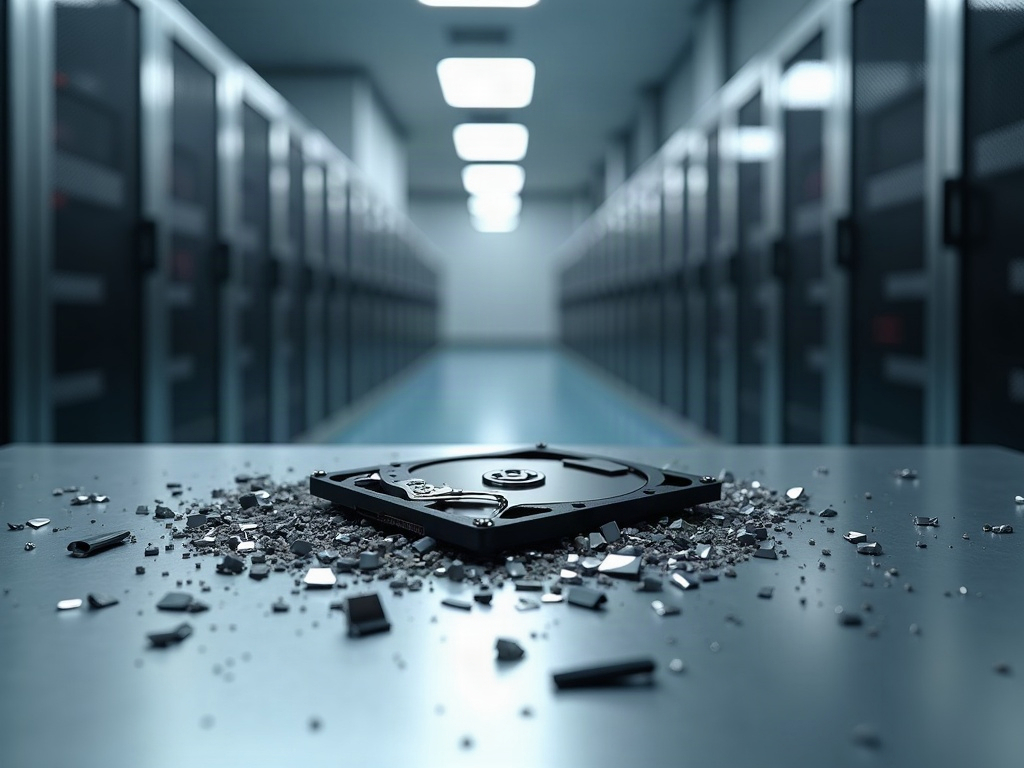
Physical destruction — shredding, degaussing, or crushing — eliminates the risk entirely. There is no partial recovery from a properly shredded platter. Certified destruction also generates a chain-of-custody certificate, which is the documentation your cyber insurance auditor, compliance officer, or legal team will want to see if questions ever arise. Think of it as the difference between locking a door and removing it from the building.
“A certificate of destruction isn’t paperwork — it’s your legal proof that the data no longer exists. That document has ended investigations and closed audits. Never retire sensitive hardware without one.”
— Ram, Cybersecurity Architect & Data Center Specialist
For businesses near the Scottsdale Airpark or operating across the East Valley, the logistics matter too. On-site destruction — where the shredder comes to your facility and you watch the drives rendered unreadable — removes the chain-of-custody gap that off-site destruction can introduce. Every moment a drive is in transit is a moment of exposure. We build the destruction process around your environment, not a generic vendor checklist.
Destruction Is One Layer — Not the Whole Strategy

Proper hard drive destruction works best as part of a broader data lifecycle policy. That means:
- Encryption at rest and in transit throughout active use — so that even if a drive were recovered before destruction, the data is unreadable without the key. Strong IT security controls for sensitive data handling close that gap proactively.
- A documented asset inventory — you cannot destroy what you cannot account for. Shadow IT and forgotten endpoints are a real exposure; if you’ve never audited yours, discovering shadow IT on your network is a smart first move.
- An Arizona data loss prevention policy with teeth — clear internal rules for who handles retiring hardware, what approvals are needed, and what documentation is retained.
- Scheduled refresh cycles — ad hoc disposal is where corners get cut. A planned cycle keeps destruction verifiable and auditable.
For regulated businesses, the stakes compound fast. A breach traced back to an improperly retired drive can trigger HIPAA penalties, PCI fines, and the kind of reputational damage that does not wash off quickly. Our compliance and regulatory services help Phoenix metro businesses build destruction and data lifecycle protocols that satisfy auditors before an incident forces the conversation. If you want to understand the full picture of what auditors actually look for, this breakdown of what cyber insurance auditors check — and the gaps most businesses miss is worth your time.
Cost-wise, certified on-site hard drive destruction for a typical business hardware refresh in the Phoenix metro area area generally runs from a few hundred dollars for a small batch to a few thousand for an enterprise-scale retirement project — far less than the average cost of a data breach, which the IBM Cost of a Data Breach Report consistently places above $4 million for mid-size organizations. The math is straightforward.
I’ve been in enough server rooms across AZ to know that the businesses that get this right are the ones treating hardware end-of-life with the same seriousness as a firewall deployment. The ones that don’t are the ones I hear from after the fact — and that is a call nobody wants to make. If you are refreshing hardware, opening a new facility, or simply not sure what your current retirement process actually covers, reach out to EfficienIT at (602) 750-1083 — day or night. Let’s get it handled right the first time.